DNS is the distributed naming system that lets software find services by domain name. When an address or mail record changes, different resolvers can temporarily return different answers because they cache data for the record’s time to live. People often describe this interval as propagation, but there is no single global switch that updates everywhere at once. Understanding authoritative data, resolver caches, and TTL values makes the process easier to diagnose.
Separate authoritative changes from cached answers
A domain’s authoritative nameservers publish the current zone records. Recursive resolvers ask those servers for answers and may cache each response until its TTL expires. After a record changes at the authoritative source, a resolver with an older cached value can continue returning it for the remaining cache lifetime. The registrar, DNS hosting provider, and public resolver each play different roles; checking only a registrar dashboard does not prove that the public answers are correct.
Read the record type and TTL together
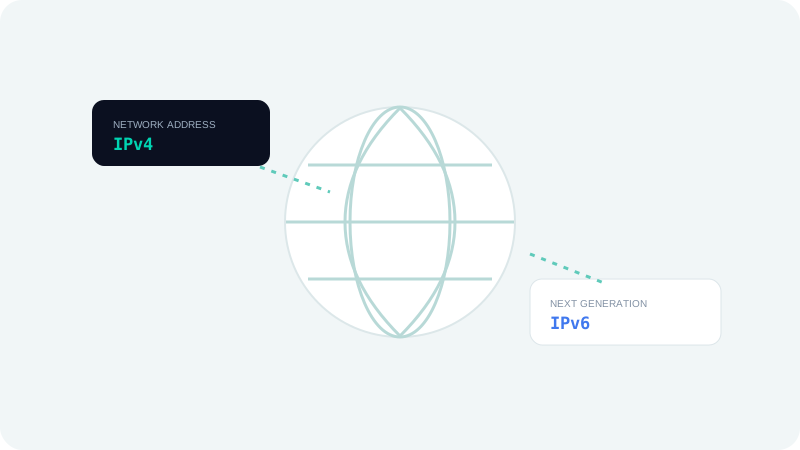
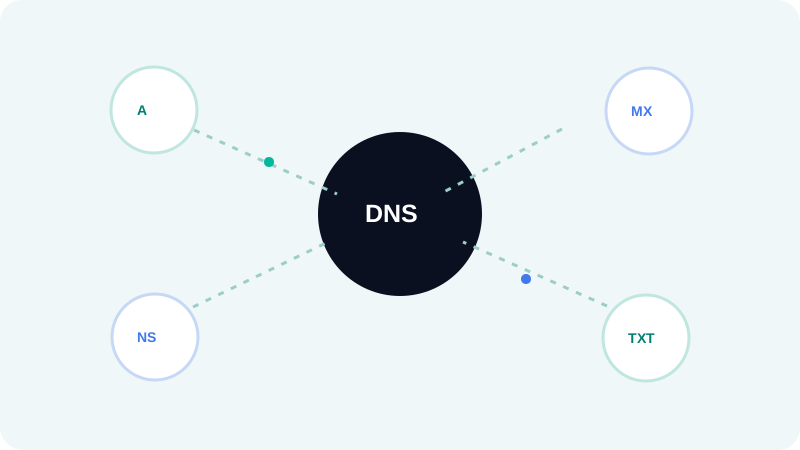
An A record maps a name to IPv4, while AAAA maps it to IPv6. MX records direct email delivery, CNAME records alias one name to another where allowed, and TXT records commonly carry verification or mail policy strings. TTL is typically shown in seconds and influences caching, not the total time required for every user to see a change. A low TTL set shortly before a migration may not help clients that already cached a longer previous value.
Check the delegation chain
If answers do not match expectations, verify which nameservers are delegated at the registry and whether those servers serve the intended zone. A record entered into a DNS provider that is not authoritative for the domain will have no effect on public resolution. Compare the zone’s authoritative responses with multiple recursive resolvers. Also check for child-zone delegation, DNSSEC configuration, and stale records at a previous provider when moving DNS hosting.
Plan a change before editing records
Record the current values and TTLs, identify dependent services, and lower TTLs in advance when a planned migration allows it. Confirm the destination service is ready before changing records. For mail, preserve MX, SPF, DKIM, and DMARC records and coordinate with the receiving provider. After the change, query the authoritative nameservers and a small set of known public resolvers. Keep the old service available during the expected cache window when practical.
Interpret disagreements carefully
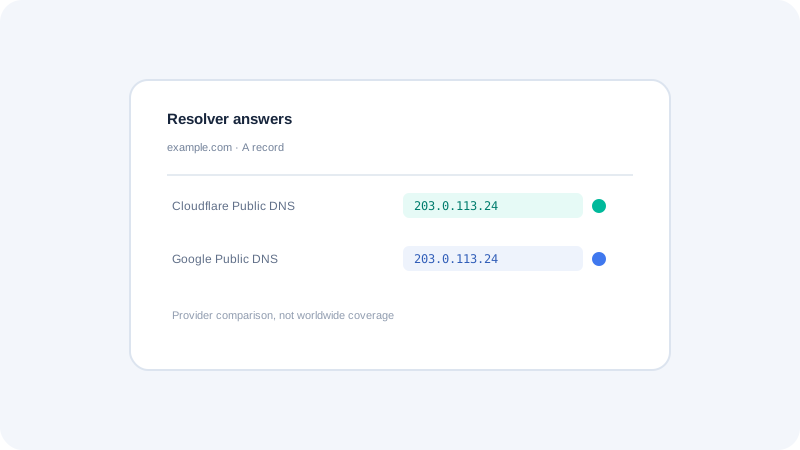
A resolver comparison is a sample of specific networks, not a survey of every country, ISP, device, or corporate cache. Different answers can be expected during a transition, but persistent disagreement after TTL expiration may reveal delegation errors, split-horizon DNS, DNSSEC validation failures, or a stale local cache. Save the record type, resolver name, response, and timestamp. Avoid reporting a single answer as proof that every visitor sees the same destination.
Quick checklist
- Find the authoritative nameservers before changing a zone.
- Note old and new record values and TTLs.
- Protect mail records during nameserver or address changes.
- Compare named resolvers and keep timestamps.
- Allow existing caches to expire before declaring a failed change.
What to do next
DNS changes become easier to reason about when the source of authority and cache lifetime are known. Compare observations without treating a limited resolver sample as global coverage. Continue with the related Seoptiz tool and compare its stated limitations with your needs.