IPv4 and IPv6 are two versions of the Internet Protocol used to address network interfaces. IPv4 uses compact 32-bit addresses and remains common, while IPv6 provides a much larger address space and is increasingly available from networks and hosting providers. A website can support one or both. For site owners, the practical question is whether DNS, server listening, routing, firewalls, and application behavior work consistently across the paths visitors may use.
Understand the address formats
An IPv4 address contains four decimal octets, such as 192.0.2.10. IPv6 is written as hexadecimal groups separated by colons and can compress a run of zero groups. These formats are not interchangeable strings, and an IPv4-only client cannot directly use an IPv6 address without a translation mechanism. Documentation examples often use reserved ranges; do not mistake them for public destinations.
Check DNS publication and service binding
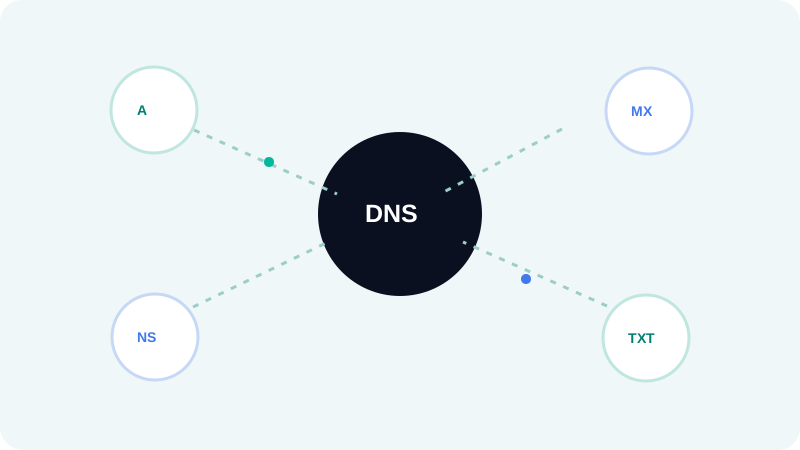
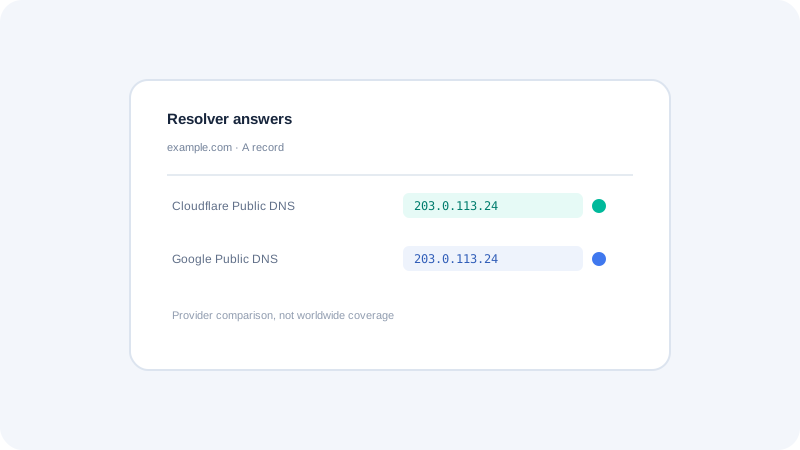
An A record publishes an IPv4 destination and an AAAA record publishes an IPv6 destination. Publishing AAAA creates an expectation that the server can accept IPv6 traffic for that host. Confirm the process listens on the intended interface and that the firewall and upstream network permit the connection. A record can resolve correctly while the server is unreachable, so test DNS and connectivity as separate observations.
Compare application behavior on both paths
A site may return different redirects, certificates, virtual hosts, or content depending on which address the client reaches. Check the hostname, not merely a raw address, so TLS Server Name Indication and HTTP host routing are preserved. Compare response status, certificate name, and representative page behavior. If one path fails, confirm the web server is bound correctly and the hosting provider supports the protocol end to end.
Plan a migration without breaking clients
When enabling IPv6, provision the server and firewall first, test the hostname, and only then publish the AAAA record. Keep a rollback plan and monitor both families. During a migration, a broken IPv6 endpoint may affect users whose clients prefer IPv6 even while IPv4 works. Conversely, removing an address record can take time to be reflected by cached resolvers. Coordinate DNS TTLs with the operational change.
Interpret ownership and geography carefully
An address does not reliably identify a person, precise physical location, or the organization operating a website. Cloud services, carrier-grade NAT, VPNs, and shared hosting complicate attribution. Public and private classification is based on address allocation rules, not a judgment about intent. If you need geolocation or ASN details, use a licensed, current data source and state its coverage and uncertainty.
Quick checklist
- Test both DNS record families when both are published.
- Preserve hostname and TLS behavior during connectivity tests.
- Do not publish AAAA until the IPv6 service path is ready.
- Separate address classification from ownership attribution.
- Monitor IPv4 and IPv6 after infrastructure changes.
What to do next
Dual-stack readiness is an end-to-end property. DNS, network access, certificates, and application routing must agree before visitors can rely on both address families. Continue with the related Seoptiz tool and compare its stated limitations with your needs.