Keyword research is a way to understand the language people use when they look for information, products, or solutions. Paid platforms can provide useful volume and competition estimates, but those numbers are not available from a text-only tool and should never be guessed. You can still build a useful starting map from customer questions, site search, public language, and the content your organization can genuinely support.
Begin with real audience questions
Collect the wording used in customer conversations, support requests, sales calls, product reviews, and internal site search. Organize questions by the decision or task behind them, not just by shared nouns. A phrase that looks small in a spreadsheet may signal a high-value problem for a specialized audience. Preserve the exact language first, then normalize spelling and combine only clearly equivalent expressions.
Expand topics with local alternatives
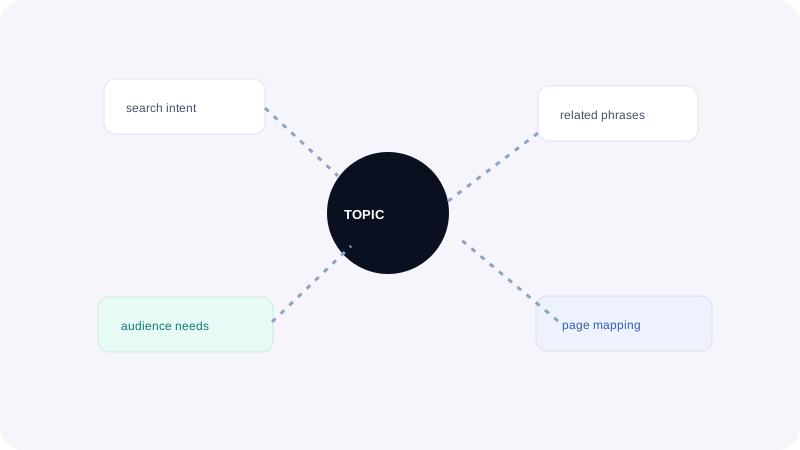
A local phrase generator can suggest modifiers, question forms, and related terms from text you supply. Treat these as brainstorming prompts, not evidence of search demand. Review each suggestion for meaning, audience fit, and factual relevance. Add synonyms and common questions from trusted sources, then group them into themes that can support distinct pages or sections. Do not publish a separate page for every superficial wording variation.
Classify intent before assigning a page
A query may seek an explanation, compare options, locate a provider, or complete a transaction. The wording alone can be ambiguous, so examine context and the likely next action. Map one primary page to a coherent topic and use supporting content to address related needs. If several phrases imply different goals, separate them or create clear sections rather than forcing every term into one generic article.
Choose topics you can answer well
Prioritize subjects where the organization has direct experience, reliable sources, and a practical contribution. A page should satisfy the reader’s question more clearly than a collection of repeated definitions. Include examples, limitations, and steps that can be verified. If the content depends on changing legal, technical, or product facts, assign an owner and review date. Search visibility is not a reason to publish unsupported claims.
Track learning without false precision
Record the phrase, intended audience, page, rationale, source, and review date. If you later add paid or free search data, document provider, geography, device, and collection date so estimates are interpreted properly. Search demand changes and different tools may report different values. Without those sources, describe a local analysis as text-based research and make no promises about volume, CPC, difficulty, or future rankings.
Quick checklist
- Collect phrasing from actual customers and site interactions.
- Treat locally generated suggestions as ideas, not measured demand.
- Map topics to intent and a useful page.
- Prefer expertise and audience benefit over keyword repetition.
- Record a data source before citing search metrics.
What to do next
Research can start without expensive software, provided the evidence is labeled honestly. Build a topic map around real questions and improve it as trustworthy data becomes available. Continue with the related Seoptiz tool and compare its stated limitations with your needs.