Crawlability describes how reliably a crawler can discover and request a site’s important public pages. A site can have excellent content yet make discovery difficult through broken links, inconsistent URLs, deep navigation, or server errors. Improving crawlability is not about asking bots to fetch everything faster; it is about publishing a coherent information structure and allowing authorized crawlers to reach the pages that matter.
Build paths from meaningful links
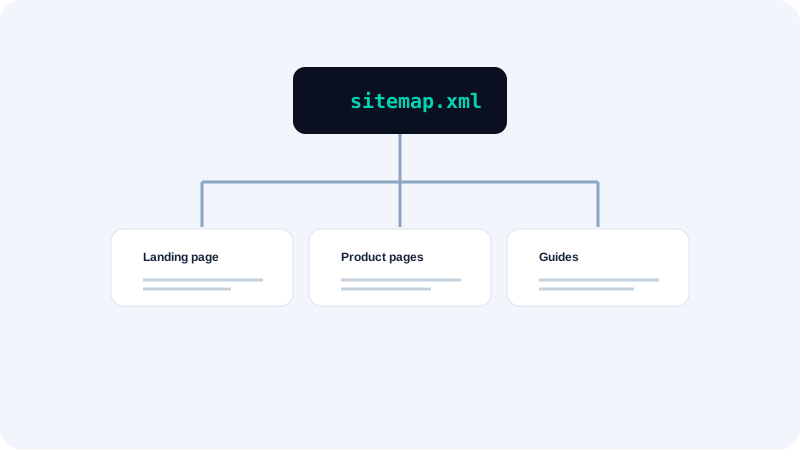
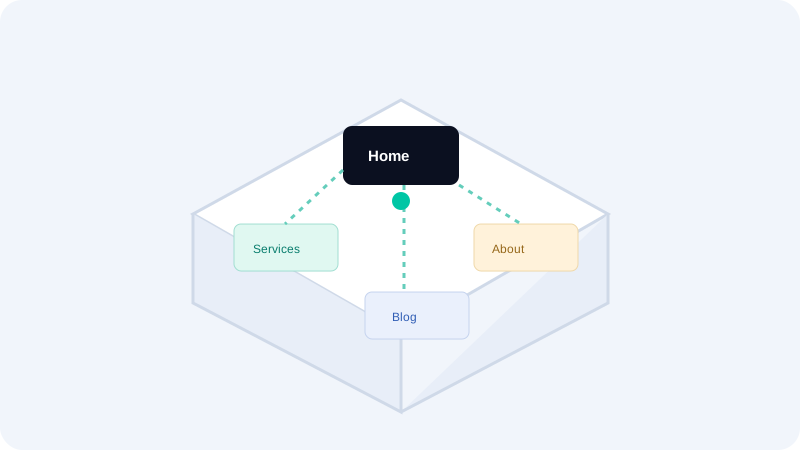
Important pages should be reachable through ordinary links from relevant sections of the site. A URL present only in a sitemap may be discoverable, but it lacks useful context from the site’s own navigation. Use descriptive anchor text and connect related guides, products, and categories where that helps readers. Avoid relying entirely on script-only interactions when a standard link can provide a stable, accessible path.
Reduce unnecessary URL variants
Parameters, session identifiers, sorting options, case differences, and trailing-slash variations can multiply the set of URLs a crawler encounters. Decide which versions represent distinct pages and which should consolidate. Use consistent internal links, canonical URLs, redirects, and sitemap entries. Do not remove parameters that change meaningful content without understanding their function. URL normalization should preserve working user journeys and analytics requirements.
Make server responses predictable
Check status codes, redirect chains, timeouts, and page availability from the public environment. A crawler may receive different results from a logged-in browser, a CDN edge, or a region-specific server. Fix recurring server errors and avoid redirect loops. Ensure key navigation and page content are not hidden behind a required session if they are intended to be public. Monitor rate limits so legitimate crawlers can access useful pages without stressing the service.
Use robots and canonical signals coherently
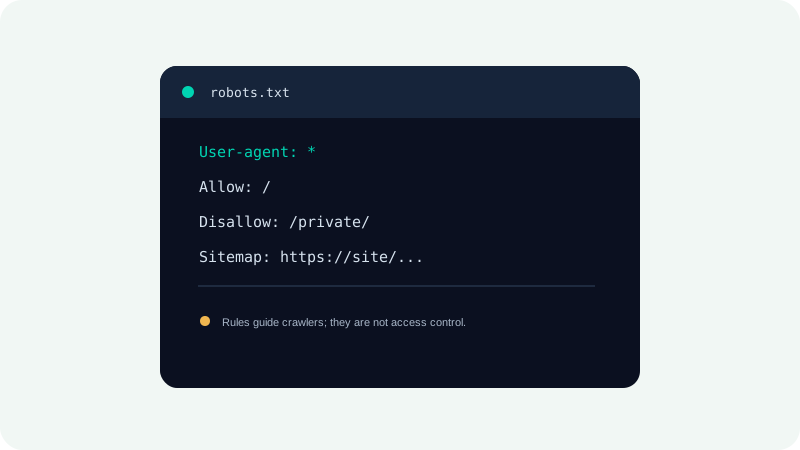
Review crawl rules alongside canonical, noindex, and sitemap settings. Blocking a URL prevents a crawler from reading page-level instructions; listing a blocked or redirected URL in a sitemap sends inconsistent signals. Keep public pages crawlable when they need discovery, and protect private content with server authorization. Review staging and development domains separately to avoid exposing test content or accidentally carrying noindex controls into production.
Measure with a bounded sample
Start with a known set of important URLs, then follow links within the authorized domain using a limited crawl budget. Respect robots.txt, set a descriptive user agent, rate-limit requests, enforce page and response-size limits, and validate every redirect. Compare the crawl’s discovered URLs with the site’s intended inventory. A small, reproducible sample is often more actionable than an aggressive scan that creates load and produces a large list without priorities.
Quick checklist
- Link important pages from relevant, crawlable sections.
- Normalize duplicate URL formats without breaking useful parameters.
- Review status, redirect, robots, canonical, and sitemap signals together.
- Keep a limited crawl budget and honor robots.txt.
- Use an intended page inventory to find discovery gaps.
What to do next
Crawlability improves when a site’s links, URLs, and technical signals tell one consistent story. Measure deliberately, respect published policies, and keep server load low. Continue with the related Seoptiz tool and compare its stated limitations with your needs.